
Lancaster sits at about 2,350 feet in the Antelope Valley, and it is a genuinely cold place in winter by California standards — cold enough that frozen pipe calls are a normal part of December and January here rather than an unusual event. Our emergency line is answered 24 hours a day and crews cover 93534, 93535 and 93536.
Winter freezes. Overnight lows drop below freezing regularly from late November through February, and the Antelope Valley wind makes exposed plumbing lose heat faster than the air temperature alone suggests. Garage runs, crawl space lines, hose bibs left connected, and supply lines in uninsulated exterior walls are the usual casualties. The pipe splits during the freeze but stays sealed by ice, so the water arrives at thaw, frequently mid-morning after everyone has left for work.
Post-war and 1950s to 1970s housing. Central and East Lancaster include a lot of stock from the aerospace boom years. Galvanized supply lines from that era corrode from the inside until a joint fails, and cast iron drains of the same age crack and back up into the house.
The 1980s onward tracts in West Lancaster and toward Quartz Hill. These are slab-on-grade neighborhoods, and many used polybutylene supply piping that fails at the fittings decades later. An under-slab leak here runs unnoticed for weeks, surfacing as a warm spot on the floor, an unexplained jump in the water bill, water you can hear running with every fixture off, or a musty smell confined to one room.
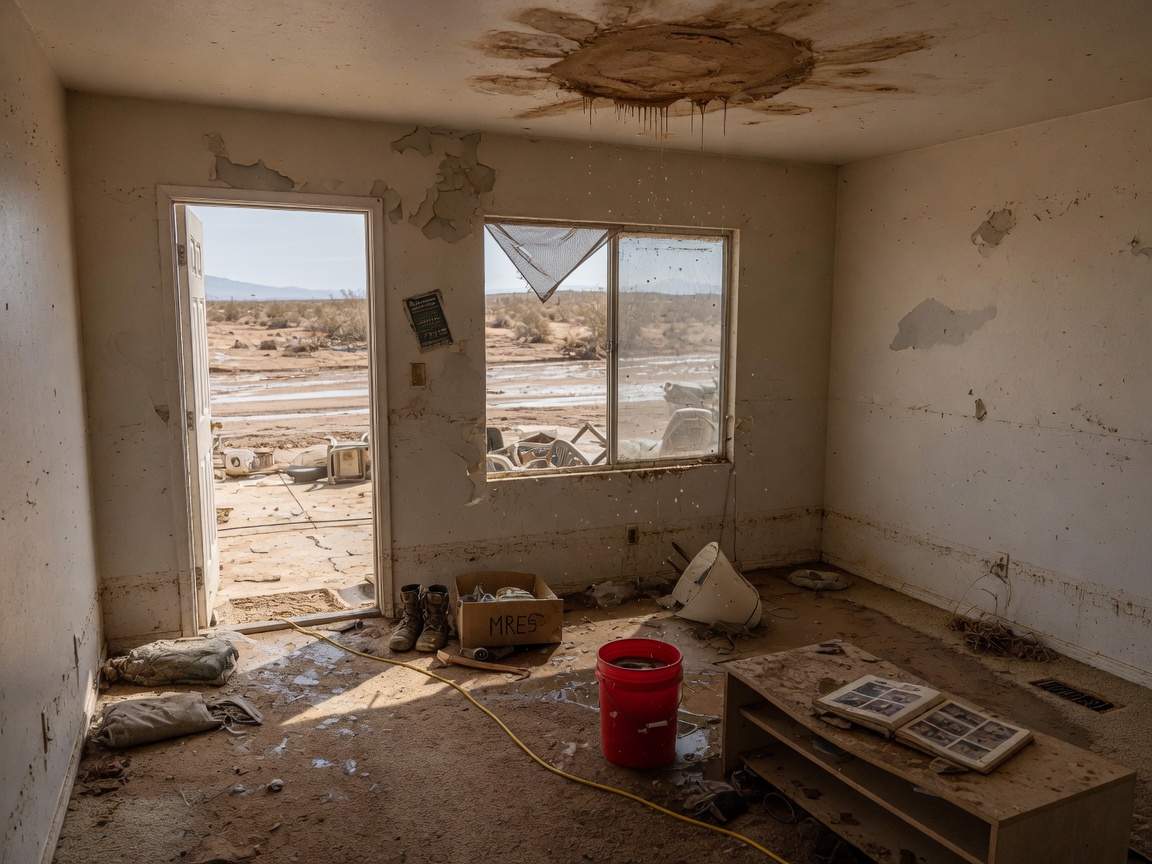
Storm runoff and flat terrain. The valley floor is flat and the soil sheds water rather than absorbing it, so heavy winter rain pools and pushes in under garage doors and thresholds, particularly in the low-lying parts of East Lancaster. Outside water is contaminated and has to be handled accordingly.
Summer heat and appliances. Triple-digit summer days stress water heaters, washing machine hoses and evaporative coolers, which is why appliance-related failures cluster from June through September.
We handle 24/7 emergency water extraction, burst pipe cleanup, sewage backup cleanup, structural drying and complete water damage restoration across Lancaster and the Antelope Valley.
Around Lancaster
We regularly work near:
- 📍Antelope Valley California Poppy Reserve
- 📍Lancaster Museum of Art and History
- 📍Aerospace Walk of Honor
- 📍Antelope Valley Hospital
- 📍The BLVD
Emergency Water Removal in Lancaster — Local Notes
- •Lancaster's winter lows below freezing are routine from late November through February, and Antelope Valley wind strips heat from exposed plumbing faster than air temperature alone would suggest.
- •Frozen pipes split during the cold but remain plugged with ice — flooding usually begins at thaw, often mid-morning once the house is empty.
- •Disconnecting garden hoses before the first freeze prevents a large proportion of local hose bib failures each winter.
- •Aerospace-era housing in Central and East Lancaster often retains galvanized supply lines and cast iron drains, both prone to sudden failure.
- •West Lancaster and Quartz Hill slab tracts commonly used polybutylene supply piping, which fails at the fittings and hides under-slab leaks for weeks.
- •The flat valley floor sheds rather than absorbs heavy rain, so winter storm water pools against garage doors and thresholds in low-lying East Lancaster.
Nearby cities we serve