Keep everyone out of the affected area, including pets, and do not try to clean it up yourself. Sewage is Category 3 water — black water — and it carries bacteria, viruses and parasites. Mopping it, running a household vacuum over it or walking through it and then through the rest of the house spreads contamination into places that were fine. If the backup is near outlets or a breaker panel, stay out entirely and cut power to that area only if you can reach the panel without standing in water. Then call; we answer 24 hours a day.
Why sewage is handled completely differently from a burst pipe. With clean water, the goal is to dry materials in place and save as much as possible. With sewage that is not an option for anything porous. Carpet and pad, saturated drywall, insulation, particleboard, upholstered furniture and anything else that absorbed contaminated water comes out and is disposed of, because these materials cannot be reliably disinfected all the way through. Hard, non-porous surfaces — concrete, tile, sealed hardwood, framing — can generally be cleaned, treated and dried. Knowing which is which is most of the job.
Containment first. Before anything is removed, the affected area is isolated with physical barriers and negative air pressure so contaminated air and disturbed material are not carried into the rest of the building. This matters as much as the extraction itself. Plenty of the worst outcomes we see come from a well-meaning cleanup that pushed contamination through a whole house before anyone called.
What causes backups in California homes. On sewer connections, the usual causes are a blocked or collapsed main line, tree roots in older clay laterals, and grease buildup. Municipal lines surcharging during heavy rain can push sewage back up into the lowest fixtures in a house. On septic — common across the High Desert, Morongo Basin and rural parcels throughout the state — the causes are a leach field saturated after heavy rain, a tank overdue for pumping, or a system carrying more load than it was sized for. Short-term rentals are particularly prone to the last of these. Either way, the underlying plumbing or septic fault has to be fixed as well, or it will happen again.
Then drying, deodorising and clearance. Once contaminated materials are out and surfaces have been cleaned and treated with EPA-registered antimicrobials, the structure is dried with air movers and dehumidifiers, with readings taken daily at fixed points. Odor is addressed at source rather than masked — residual smell almost always means residual contamination or moisture somewhere. Final readings and photographs are documented for your insurance claim.
Technician insight
The most damaging thing people do is try to clean it up themselves before calling. Mopping sewage and carrying the bucket through the house, or running a wet vac across it, turns a contained problem in one room into a contaminated path through the whole building — and the vacuum itself is then a write-off. Shut the door on it, keep everyone out, and let containment go up first.
Main Line Backup Into a Downstairs Bathroom
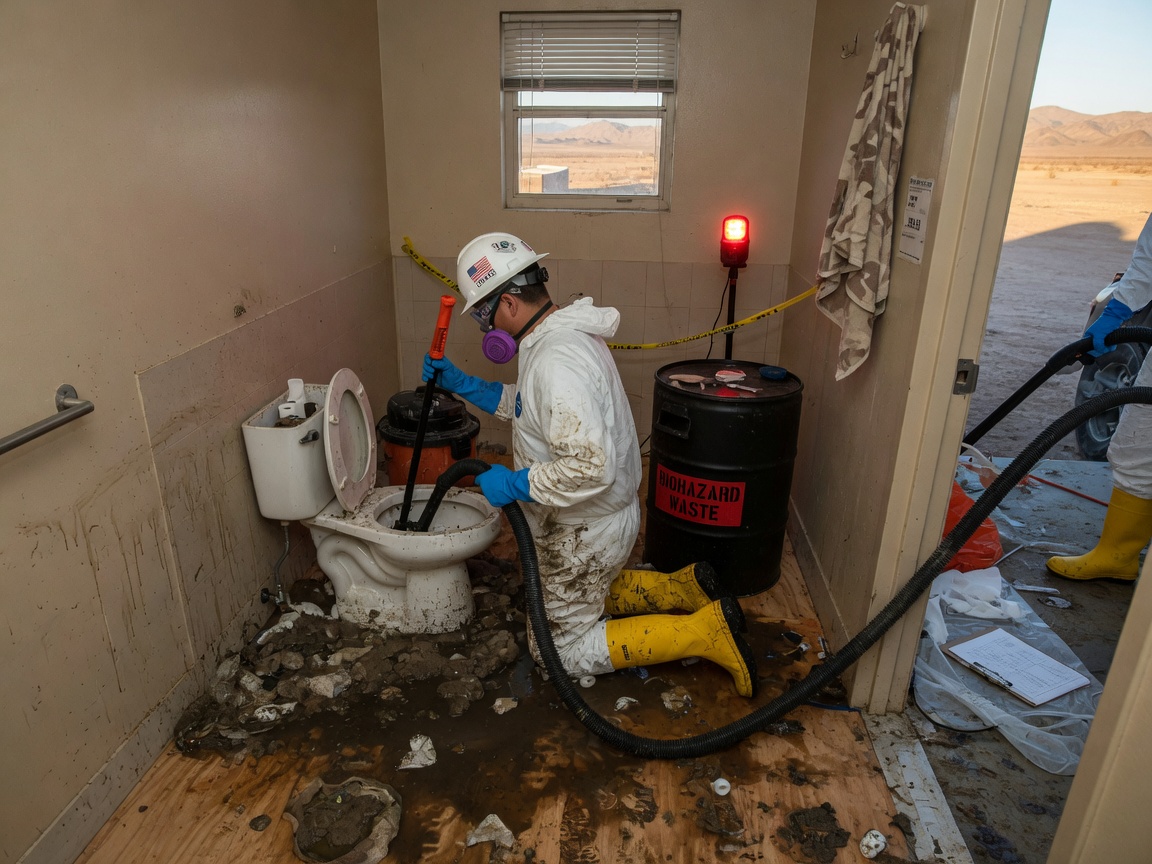
A blocked sewer lateral caused sewage to back up through a ground-floor shower and toilet, spreading across the bathroom and into an adjoining hallway and bedroom carpet. Containment was built before anything was touched. Standing water was extracted, then carpet, pad and the lower two feet of drywall were removed across the affected rooms. Framing, subfloor and slab were cleaned, treated and dried over four days with daily readings. The plumbing fault was cleared separately before reinstatement began.
Sewage Backup Cleanup Services We Offer
✓Black Water Extraction
Removal of standing sewage from floors, subfloor cavities and low areas with equipment dedicated to contaminated water.
✓Containment and Negative Air
Physical barriers and negative pressure with HEPA filtration to stop contamination spreading into unaffected parts of the building.
✓Contaminated Material Removal
Safe removal and disposal of carpet, pad, saturated drywall, insulation and other porous materials that cannot be disinfected through.
✓Disinfection and Antimicrobial Treatment
EPA-registered antimicrobials applied to all affected hard surfaces and framing after extraction and removal.
✓Odor Removal
Treating odor at source once contamination and moisture are resolved, rather than masking it with fragrance.
✓Structural Drying and Clearance
Drying framing, subfloor and slab with daily moisture readings until the structure reads dry, with final documentation.
How it works
- 1
1. Call — and Keep Everyone Out
We take the call at any hour and tell you what not to touch. Keep people and pets out of the area and stop using fixtures that drain into the affected line.
- 2
2. Assessment and Source Identification
The crew identifies whether this is a sewer or septic failure, traces how far contamination spread, and documents affected materials before anything is moved.
- 3
3. Containment
Barriers and negative air pressure isolate the area so removing material does not carry contamination through the rest of the building.
- 4
4. Extraction and Material Removal
Standing sewage is extracted, then porous contaminated materials are removed and disposed of — carpet, pad, saturated drywall, insulation and affected contents.
- 5
5. Cleaning and Disinfection
Hard surfaces, framing and subfloor are cleaned and treated with EPA-registered antimicrobials rated for Category 3 water.
- 6
6. Drying, Odor Control and Final Clearance
Air movers and dehumidifiers run with daily readings until the structure reads dry. Odor is resolved at source, and you receive final readings and photographs for your claim.
Pricing
Sewage work costs more than clean water of the same volume, because far more material has to be removed and disposed of, containment has to be built, and disinfection is a separate stage. The main drivers are how far the contamination spread, which materials absorbed it, and whether it reached wall cavities or subfloor. You get a full written scope and quote after the on-site assessment and before any work begins.